
How many restrooms does a race in Port Arthur need?
Start with runner count, then split it across aid stations instead of clustering everything at the finish line. OSHA 1926.51(c) sets the construction-site ratio at one toilet for 20 workers or fewer, and while a race is not a jobsite, race directors in Port Arthur use that same math as a starting baseline: one unit per 20 to 25 participants at peak use, scaled up near the finish where crowds bottleneck. A 5K with 300 runners might need 6 units total. A half marathon with 1,200 runners spread over a longer course usually needs 15 to 20, split between start, mid-course aid stations and the finish chute. Check our guide to sizing porta potty counts for the full breakdown by event type. Every cluster needs at least one accessible unit under ADA Standards section 213.2, which requires 5 percent of a clustered group, or one unit minimum, to meet accessibility specs including the 60 inch turning circle in section 304.3.1. For races drawing spectators and vendors alongside runners, pair your standard porta potty rental count with a handwashing station rental near any food tents. If your course runs through Port Arthur and touches neighboring towns, remember Groves sits 4.4 miles northwest and Port Neches is 6.5 miles northwest, both close enough that a single delivery run can cover a course crossing city lines.
Where should restrooms go along a race course?
Placement follows the course, not convenience. Units belong at the start line, every aid station, and the finish, with extra capacity wherever runners bunch up waiting for corrals to open. Our porta potty placement guide covers ground clearance and truck access, and for race events the same rule applies: a service truck needs about 60 feet of straight clearance to position and pump, so avoid setting units in tight alleys or behind barricades that block that approach. Courses that run near active construction or staging areas should also plan for temporary power poles if timing equipment, sound systems or lighting rigs need power at the start or finish. Knowing how to brace a temporary power pole matters here: poles get set in a stable base, guyed or braced against the pull of cabling and wind load, and kept clear of the runner lane and any barricade line so a gust or a bumped guy wire does not put a pole across the course. Pair pole placement with temporary fence rental or crowd control barrier rental to keep spectators off the course edge and away from guy lines. Route access matters too: ADA Standards section 403.5.1 calls for a 36 inch clear path to any accessible unit, so keep barricades and cable runs from narrowing that approach. If your race finish sits near a festival or expo area, a festival restroom rental package or an event restroom rental plan handles the crowd that lingers after runners cross the line.
Should we rent standard units or a restroom trailer for a race?
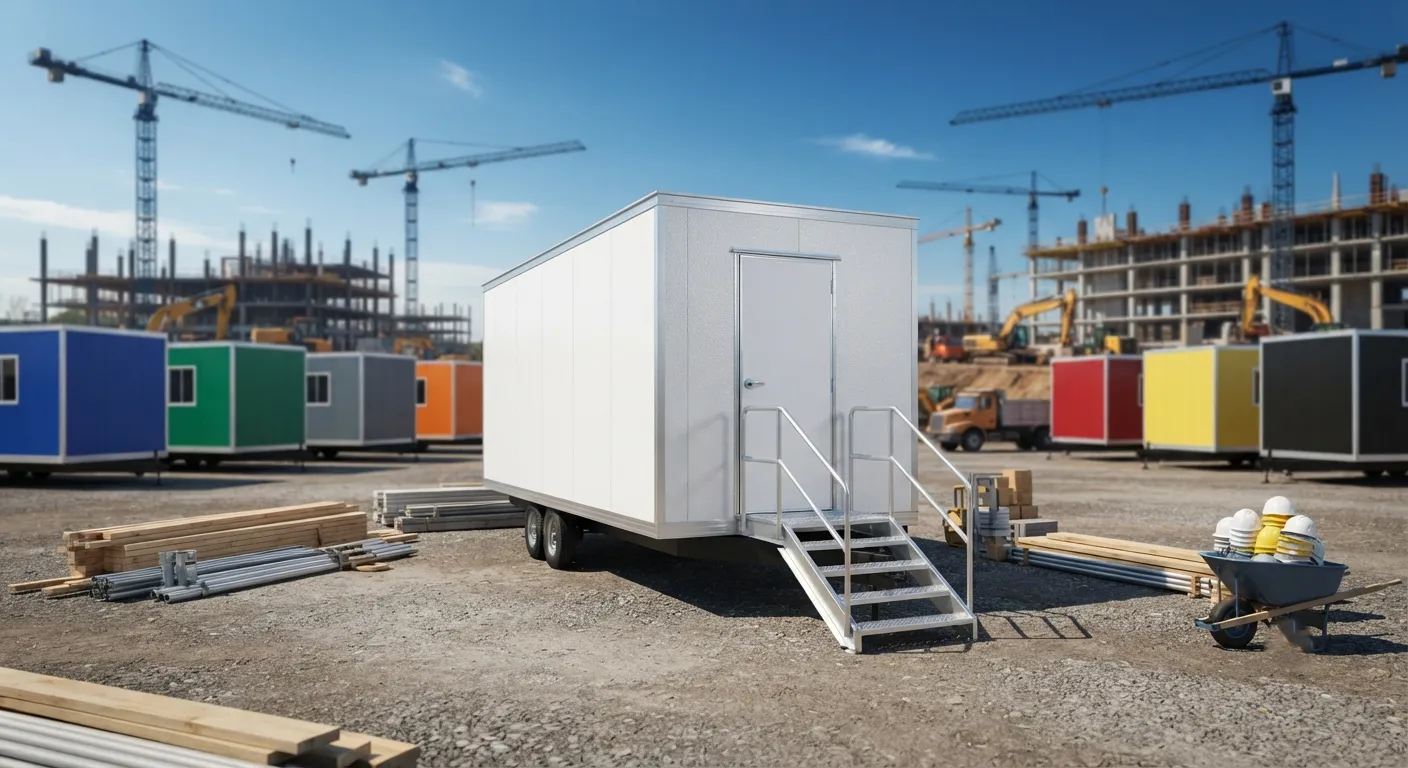
Standard units cover the course. A trailer covers VIP, staff or a finish-line hospitality area where runners and sponsors want something nicer than a stall on the shoulder. Most races in Port Arthur run mostly standard units along the route and add one small trailer near the finish for staff and elite runners. Here is how race-day pricing typically breaks down:
| unit | duration | typical cost |
|---|---|---|
| standard, weekend | weekend | around $250 |
| ada, weekend | weekend | around $240 |
| standard, event | per event | around $400 |
| trailer, weekend | weekend | around $2,000 |
A deluxe flushable porta potty sits between those two options if you want flush units without the full trailer footprint and budget. For races with a firm headcount and a single-day footprint, our porta potty rental per day page shows how day pricing compares to weekend and event rates. Multi-day race weekends, like a Friday expo through Sunday race day, often price closer to the weekend band than three separate day rentals stacked together. If your event includes an overnight camping component for out-of-town runners, look at camping porta potty options sized for that use. Whatever mix you land on, get a request a quote in early. Race permits and road closures in Port Arthur move fast once a date is set, and truck routing gets harder the closer you are to race weekend.
How far in advance should we book restrooms for a race?
Book as soon as your course map and runner estimate are final, ideally 4 to 6 weeks out. Race weekends compete with construction and event demand across Port Arthur, and trailer units especially book out fast. Waiting until race week limits your unit selection and placement options.
Do we need an ADA-compliant unit at every aid station?
At least one accessible unit belongs at your start, finish and any aid station with its own cluster of units, per ADA Standards section 213.2. A single aid station with only two or three standard units still needs one accessible unit in that group, not just at the main hub.
Can restrooms be moved mid-race if the course changes?
Units get placed before gates open and generally stay fixed once the race starts, since trucks cannot cross an active course. Plan final placement at your walk-through, not race morning. If a last-minute course change happens, call ahead so we can reroute delivery before setup.
What size crew handles restroom service during a multi-day race weekend?
That depends on your unit count and whether the event spans an expo day plus race day. A weekend event with servicing built into the rate, as shown in the weekend pricing band, typically covers one or two service visits without extra calls, following the standard weekly service interval under ANSI/PSAI Z4.3.
Do spectators and vendors need separate restrooms from runners?
Separating them helps flow, especially near a finish line where crowds mix. A portable restroom rental block for spectator zones and a separate runner-corral cluster keeps lines shorter for both groups and cuts congestion right where course marshals need clear sightlines.
Next step
Get a delivery date
Tell us the address, the dates and the headcount. We size the order and confirm the route.